
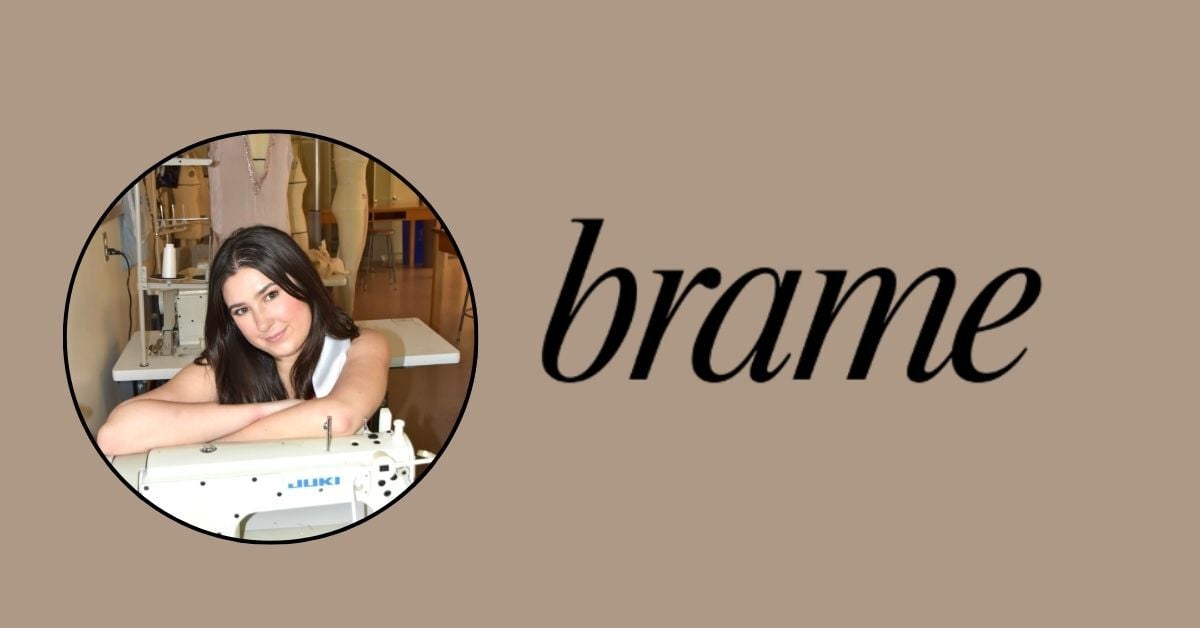
From growing up in a STEM-driven household to becoming a New York Fashion Week designer at age 23, University of Delaware alumna Annabelle Brame has always moved at the intersection of creativity, sustainability, and bold vision. A 2024 graduate with a BS in Fashion Design & Product Innovation and a minor in Entrepreneurship, Annabelle built the foundation of her fashion label, Brame, through Horn Entrepreneurship programs including Summer Founders, REEF, and VentureOn. Today, she’s crafting an entirely new conversation around ethical design, adaptable apparel, and what it means to build a fashion house rooted in purpose.
Meet the Founder
Growing up in a STEM-encouraged household, I always knew I wanted to launch a startup that bridged sustainability and fashion in the same conversation. In high school, I studied at the Chesapeake Bay Governor’s School, where I conducted my first research on textile biodegradability and longevity, and how designers can make more educated choices, especially in fast fashion, to match product needs with environmental impact.
I always knew I wanted to be an entrepreneur. I had even started a few ventures before I turned 18, but my time in Horn really kickstarted a much larger vision. My brand, Brame, focuses on convertible, high-quality, environmentally responsible clothing for women, especially eveningwear. We have two business categories: a mass-market line, made-to-order with organic materials, and a custom category built entirely from deadstock materials, zero-waste practices, and organic dye methods. That includes everything from bridal gowns to custom costumes.
What inspired your startup idea?
Why is it that men can buy one suit and wear it to every function, but women feel pressure to buy a new dress each time? And what is that cycle doing to the planet?
Answering this question took over a year and ultimately shaped our model: creating clothing that is ethical, sustainable, and adaptable, pieces that can change color, neckline, or length to offer more variety from a single garment. It helps your wallet, your closet, and the environment.
Tell us about your startup journey so far — the highs, the pivots, the learning curves.
It has been a rollercoaster. Truly. Some weeks feel like the highest of highs, and then I’ll have a week where I question every choice I’ve ever made.
Like any founder, I made mistakes. I spent money on things I shouldn’t have (like large quantities of inventory early on). I bite off more than I can chew and often end up sleep-deprived. But I’ve learned to listen to the market. I went from making workwear to club attire in six months because that’s what my audience wanted. Learning how to adapt and pivot quickly (and inexpensively) has helped my business and my sanity.
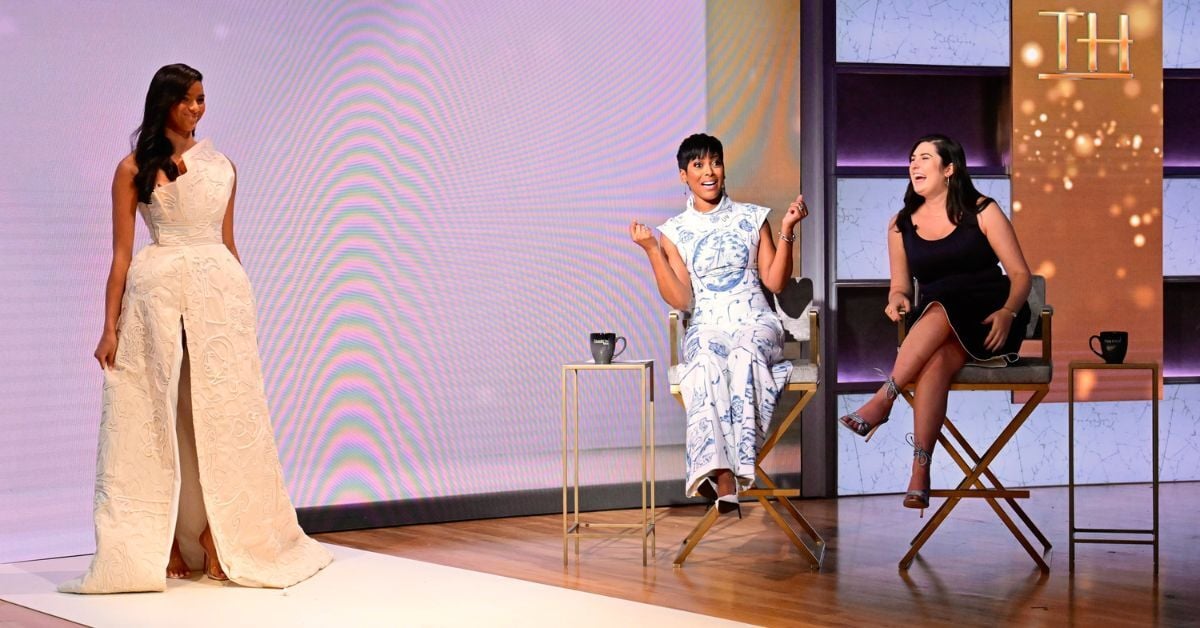
In my first year, I was featured on The Tamron Hall Show on ABC as one of their Up and Coming Designers. I signed the lease for my NYC studio, hired my first intern, got my first round of factory-made inventory, did multiple pop-ups, hired a second intern, and then showed in New York Fashion Week for the first time.
.What has been your proudest moment as a founder?
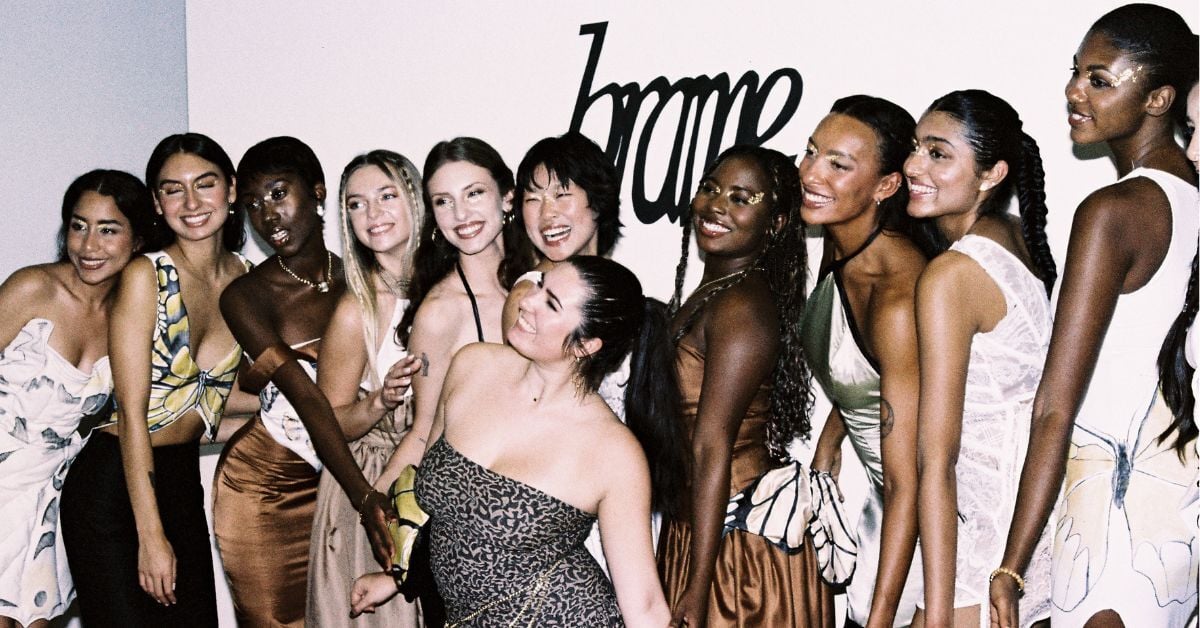
My first NYFW show. I created 30 looks in 90 days, completely by myself, using all deadstock materials. That’s unheard of in the industry. Then I put on a sold-out runway show to showcase it.
But what made it truly special was the team. Everyone—from models to backstage staff—was there as a volunteer because they believed in the mission: fashion that is accessible, beautiful, and better for the environment. And together, we raised over $1,000 for the Joyful Heart Foundation.
How did UD and Horn Entrepreneurship shape your path?
It completely influenced my entire life. I was able to financially build this company thanks to the REEF program I took in my final semester at UD with Tome. Being awarded $50k to start has allowed me to take the leap in pursuing my dream but also take risks without my livelihood being on the line.
My greatest mentor, Wendy Herman, an incredible entrepreneur, came into my life following Summer Founders and truly has helped not only my business but also helped me restructure my brain to be able to survive the challenge of being a business owner. Which leads to Summer Founders which truly gave me the foundation of customer validation and investor insight to be able to confidently start my company. And I could not thank Horn without thanking Vince, who never failed to challenge me every step of the way. Who gave me all the expectations for the life of a founder.
What did your career path look like before launching your startup?
For me, my other option would have been working for a corporation or another designer. During my time in college I interned at four different companies ranging from solo-entrepreneurs and small businesses to the complete opposite, large brands. It taught me early on what I was looking for and what I didn’t like.
I had a lot of expectations going into my career of what I thought I would really like. But through interning I was able to quickly learn and pivot without being signed onto a year long contract. It also showed me the work environment I wanted to build.
What advice would you give to current students who are thinking about launching a startup?
Make sure this is really what you want to do and you are so passionate about it. You have to eat, sleep, and breathe it. When you get started it can replace your social life or personal time, so you have to decide what it is worth to you. What are you willing to give up for this to work, and for how long you can sustain that sacrifice.
It has so many benefits but it is very mentally challenging, and I think that isn’t discussed enough. Also figure out if you can handle making your schedule everyday. You can excel in all prior jobs and in school, but the hardest transition in entrepreneurship is no one will show you the right way. There are no step by steps. So if you are going to pursue this you need to create the map and be prepared to work really hard and learn the steps you thought were the key aren’t always correct.
What’s next for you and Brame?
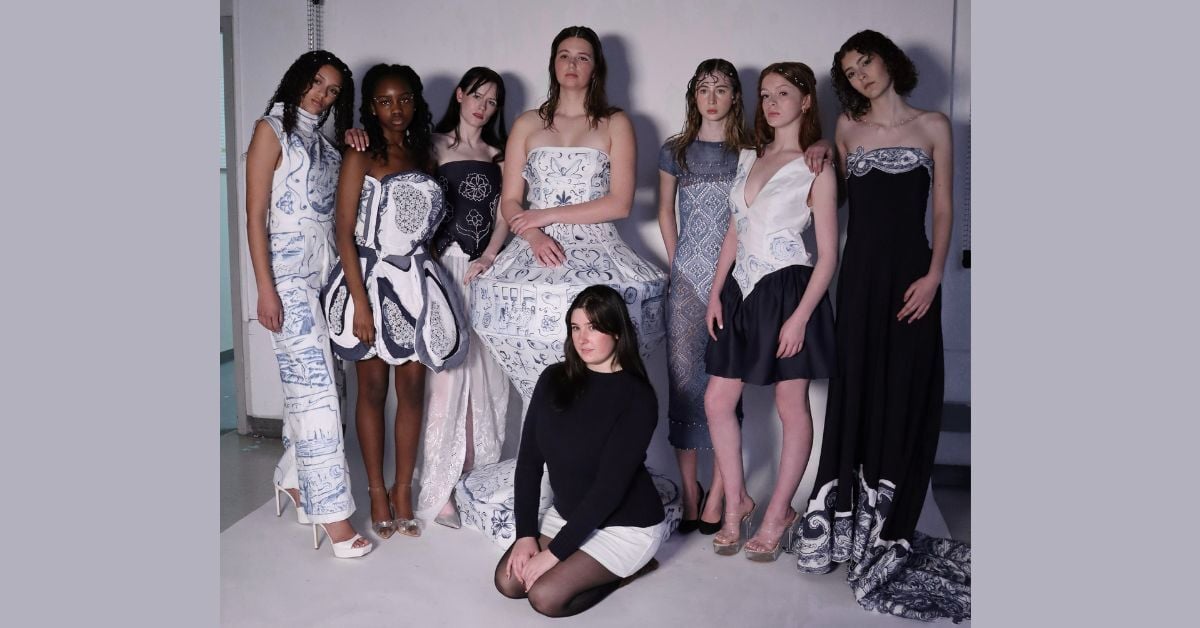
Next will be showing a bridal collection in February using all deadstock materials. I am creating special-occasion gowns that tell a story through both their artistry and the textiles themselves. This is in addition to all of our convertible wear that will continue to be offered and sold.
Also I am working on creating another venture that will build into Brame, but it is in very early stages. So it’ll be something to look forward to down the line.
Is there anything else you would like to tell the Horn community?
Life will always be hard, choose your hard. Entrepreneurship is challenging but a lot of times, for founders, the alternative is harder.
Annabelle’s journey is a testament to what happens when purpose meets persistence. With a sustainable bridal collection on the horizon, a growing mass-market line, and another venture already in development, Annabelle is just getting started. Her work reminds us that innovation doesn’t just change products, it reshapes possibilities.
About Horn Entrepreneurship
Horn Entrepreneurship is the driving force behind entrepreneurship education and innovation at the University of Delaware. Consistently ranked as one of the top entrepreneurship programs in the United States, it was founded and continues to be supported by accomplished entrepreneurs. The program empowers aspiring innovators, equipping them with the skills and resources needed to bring their ideas to life and create positive change in the world.