
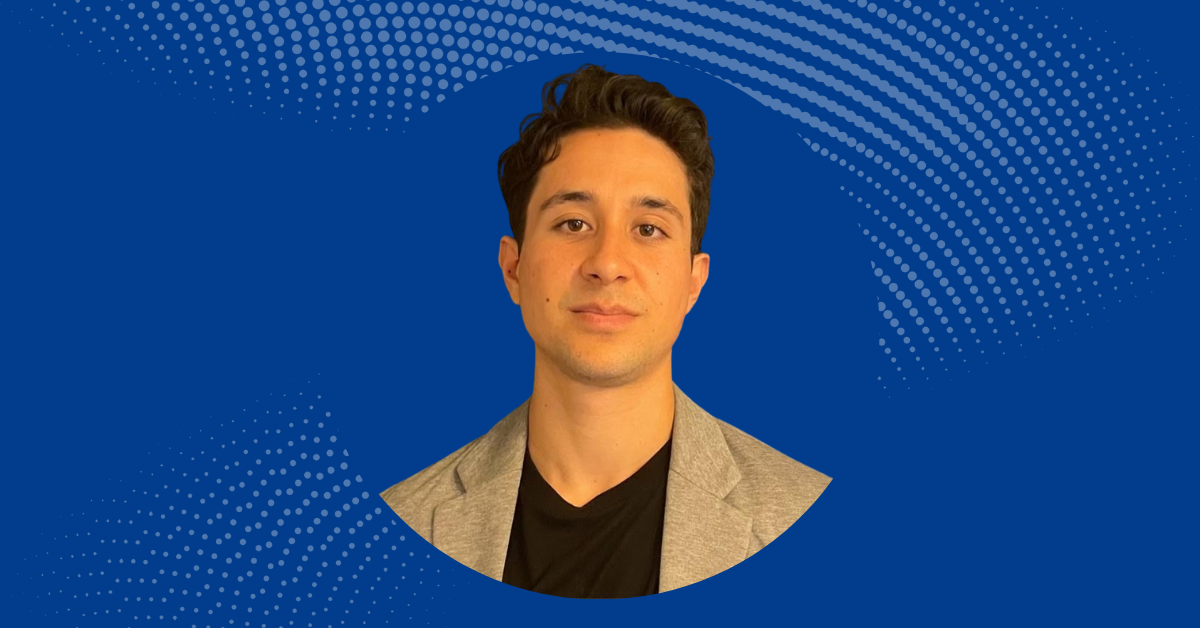
 For many college students, graduation marks the terrifying unknown of entering the traditional job market. But for Willem Westra, who graduated from the University of Delaware in 2022, the journey took an ambitious turn.
Through the UD Horn Entrepreneurship program, Westra learned early on that building a massive business doesn't require a revolutionary, "rocket ship" idea. Instead, he believes the best path is often taking a proven business model that already solves a validated market need, executing it better, and scaling it. As he puts it, even an industry as simple as landscaping can turn into multi-million or billion-dollar enterprises through superior execution—giving entrepreneurs a much higher chance of success than guessing on unvalidated concepts. Today, he runs a diverse portfolio of high-impact companies under his holding umbrella, WizoDigital.
Read more to learn about Willem’s journey from being a UD student launching crypto projects to a serial entrepreneur running a buy-side M&A firm and a legal-space performance marketing agency.
Give us your quick intro about you and your startups.
I have always considered myself a serial entrepreneur, having built experience across several different ventures. Currently, my primary focus is Atrevido Partners, a performance marketing firm operating within the legal sector. We partner with some of the nation's largest law firms, deploying upfront capital to execute ad campaigns and systematically scale case volume.
Alongside Atrevido, I operate WW Capital Group, a buy-side mergers and acquisitions firm. We partner with top-tier private equity groups to facilitate business acquisitions. Much like a traditional real estate brokerage connects buyers and sellers of residential property, we serve as the intermediary for corporate transactions, helping investment groups acquire high-yield assets.
Both of these ventures operate under WizoDigital, my holding company. Across all of our entities, the unifying theme is customer acquisition—whether that means scaling case pipelines for major law firms or driving client growth for corporate buyers.
Was there a moment of frustration or a missing piece in your life that you thought this venture would solve?
My entrepreneurial journey has been defined by recognizing market opportunities and embracing calculated risks. When I launched WW Capital Group right out of college, I entered a very traditional industry where practitioners typically possess decade-long private equity backgrounds or elite investment banking credentials. I had neither, but I identified a clear market gap: helping investment firms streamline acquisitions more effectively.
That process required thick skin. On my early sales calls, prospective clients would learn my age and attempt to end the conversation, or outright advise me to secure a traditional job. By refining my industry terminology, sharpening my value proposition, and persistently pushing through rejections, I successfully established a foothold in financial services.
I applied this exact philosophy to the legal sector. Despite having no formal legal background, a disciplined process of trial and error allowed us to scale operations and partner with some of the largest corporate law firms in the country.
Go through the process of bringing the venture to life and the work ethic that goes along with it.
A core tenet of my philosophy is working smarter, not harder. In entrepreneurship, people often assume success requires a world-changing, hyper-innovative concept. In reality, value creation usually comes down to solving straightforward problems. Across the United States, millions of businesses share a single, universal priority: client acquisition. Starting with a well-defined, validated problem eliminates the need to reinvent the wheel.
At the same time, embracing risk demands an immense amount of personal sacrifice. Building a business involves navigating unpredictable cycles: enduring difficult months, taking leaps of faith when momentum stalls, and maintaining focus until the strategy hits an inflection point.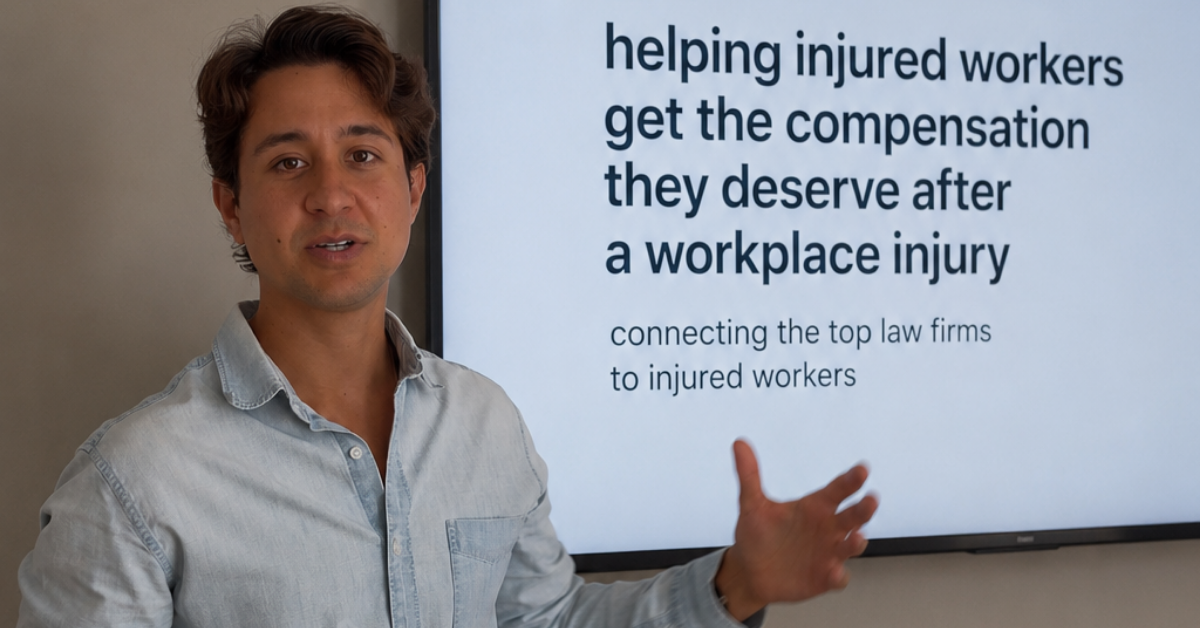
How do you mentally manage and structurally align your focus across a diversified portfolio rather than doubling down on just one?
My operational approach has evolved significantly since I launched my first company. In the early stages of a venture, I believe in being completely hands-on—immersing myself in operations and direct client management to understand every functional layer of the business before delegating.
When I founded WW Capital Group in 2022, scaling required managing a team of over 12 employees through intensive, 16-hour workdays. Today, my strategy heavily leverages modern technology and artificial intelligence. By integrating AI-driven workflows to handle operational execution, we run exceptionally lean teams. This shift has allowed me to transition from day-to-day firefighting to maintaining a high-level, strategic focus while working reduced, highly concentrated hours.
Walk me through how your customer would actually use these services.
Our services are deeply relationship-driven and customized to each client. In the mergers and acquisitions space, navigating the sale of your business is often the most significant financial decision and emotional decision of a business owner's career, making trust paramount. Our process bridges top-tier private equity firms whose investment criteria we carefully vet, ensuring seamless alignment on valuation and strategic fit.
In contrast, our work with law firms relies heavily on automated infrastructure and advanced technology. After establishing the initial partnership and onboarding phase, the operational engine runs largely autonomously through our integrated systems, with our team stepping in for high-level strategic alignment as needed.
What's the most concrete proof you have that these work?
The strongest validation is market demand and recurring revenue. Clients pay substantial monthly fees to maintain our services. Before committing capital to unproven concepts, I intentionally target established markets where customers are already actively spending money to solve a specific problem. By entering proven sectors and simply executing better than the existing alternatives, demand is inherently validated from day one.
Regardless of it being a huge or a small issue, what's been the biggest obstacle you've hit since starting and how did you work through it?
Breaking into heavily traditional, corporate industries without prior sector experience was the most significant hurdle. Establishing credibility in finance and law required overcoming skepticism regarding my background and age.
Overcoming this barrier required accumulating reps, refining our communications, conducting rigorous market research, and persevering through initial rejections until our proven track record spoke for itself.
What from your major or background makes you the right person to be building something like this?
It’s funny, but really nothing on paper made me the right fit. I was majoring in entrepreneurship with no experience in finance or law. Formal academic training does not automatically grant sector qualifications; rather, entrepreneurship is fundamentally about identifying systemic problems and executing solutions.
My background taught me how to navigate uncertainty, accept operational losses as valuable feedback data, and stay resilient until a breakthrough occurs. The real education came from practical execution rather than textbook theory.
What would you tell another UD student who has an idea but hasn't started yet?
I attribute a tremendous amount of my early momentum to Vince DiFelice and the University of Delaware’s Horn Entrepreneurship program.
What made the UD Horn experience unique was the opportunity to build an actual business rather than just study hypothetical case studies. During my undergraduate years, I launched a successful crypto venture with hands-on mentorship, guiding me from initial concept to scaling operations. Having that real-world exposure before graduation provided an invaluable foundation that traditional academic paths rarely offer.
You simply have to start. Your final product will rarely resemble your initial concept, but taking concrete action brings the next strategic step into focus. My current ventures in finance and law originated from early experiments in the crypto space; the trajectory only became clear once we took the first step.
Secondly, prioritize mentorship. You do not need to navigate every hurdle alone when you can learn directly from experienced operators who have already mapped out the market. Finally, remember that your business doesn't need to be an unprecedented invention. Look at proven, high-demand industries where customers are already paying for solutions, and focus on executing better than the competition.
Willem’s story is a powerful reminder that entrepreneurship isn't about having a shiny resume or hitting home runs on your first swing—it’s about refusing to be intimidated by old-school industries, embracing failure as data, and starting before you feel completely ready. Whether you're studying on campus right now, the blueprint is right in front of you: find a real problem, build a system to solve it, and lean into the mentors and programs—like UD Horn—that are built to help you take that crucial first step.
ABOUT HORN ENTREPRENEURSHIP
Horn Entrepreneurship serves as the creative engine for entrepreneurship education and advancement at the University of Delaware. Currently ranked among the best entrepreneurship programs in the U.S., Horn Entrepreneurship was built and is actively supported by successful entrepreneurs, empowering aspiring innovators as they pursue new ideas for a better world.